A peaceful, healthy, educated and self-reliant society, where every individual enjoys equal opportunities and basic human rights.
About LEO
A locally led organisation, rooted in Mardan since 2006
LEO combines local knowledge, community participation and partnerships with government, civil society and international organizations.
Who we are
From awareness campaigns to a registered organisation
Labour Education Organization (LEO) was established in Mardan in 2006 with a commitment to improving access to education, healthcare and basic rights for underserved communities. Over the years the organization has expanded into a multi-sector humanitarian and development organization working in clean drinking water, health, education, women's empowerment, livelihoods, shelter, emergency response, food security, child welfare, climate resilience and disaster risk reduction.
Its work is grounded in direct relationships with women's groups, youth groups, community-based organizations, water committees, volunteers and local institutions.
Our story
It started with a school that stopped too early
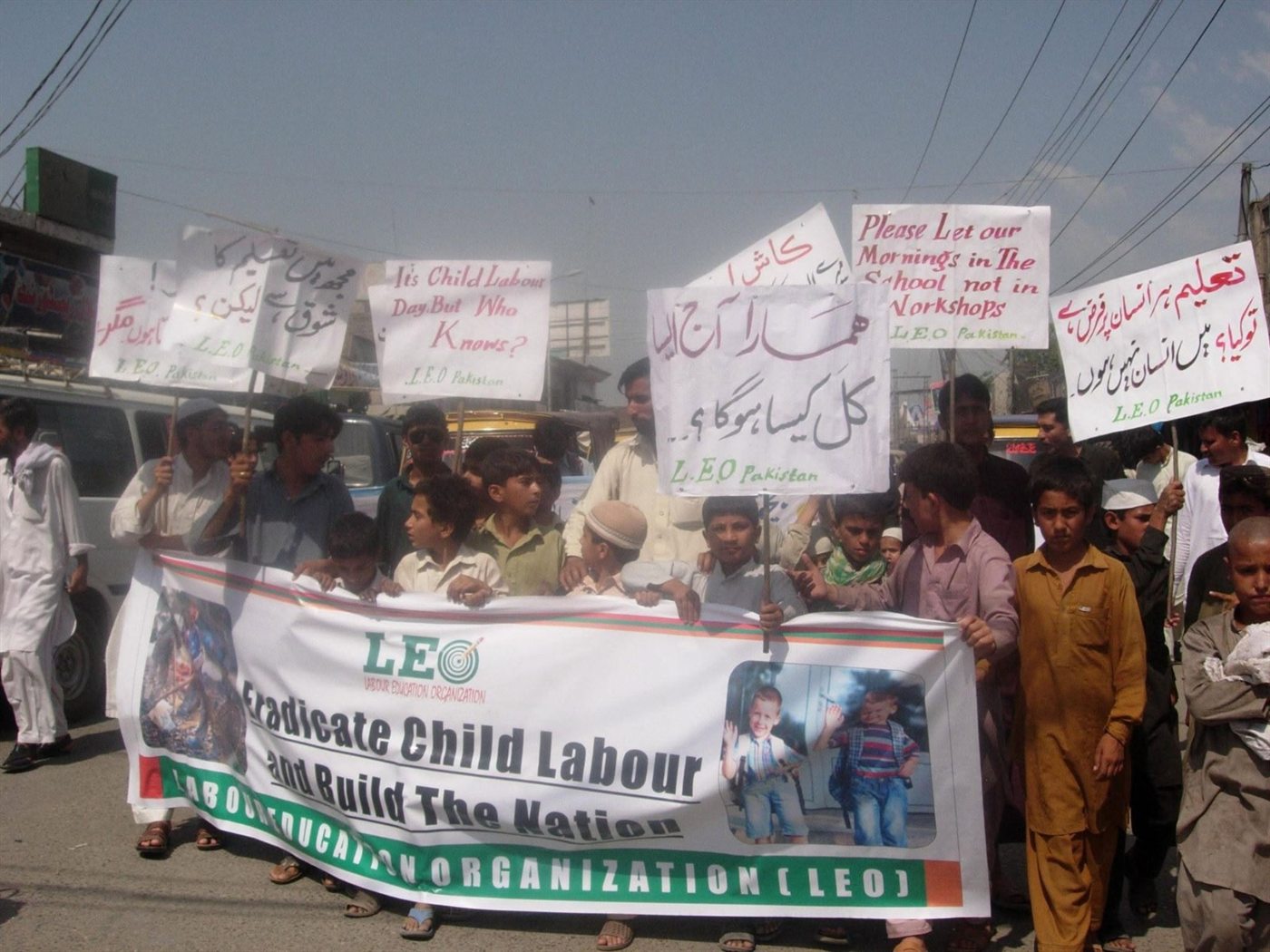
Labour Education Organization was founded in March 2006 to take on the socio-economic and educational problems of underserved rural communities around Mardan. Its first campaign was about a narrow, ordinary thing: keeping children in school past primary level.
The local school did not go beyond primary. For families who could not afford to send a child somewhere further every day, that was simply where education ended. LEO worked with local leaders, community elders and religious scholars to make the case for better educational infrastructure, added classrooms and clean drinking water to the school that existed, and then pressed for it to be formally upgraded to middle school status.
The upgrade removed the travel barrier and dropout rates fell. That sequence — organise the community, improve the facility, then get the change made official — is still how LEO works twenty years later.
Throughout this journey, Engr. Farooq Khan, writer, social worker and Chairman of LEO's Board of Trustees, has remained the dreamer, achiever and mentor behind the organization: guiding its direction, strengthening its systems, and helping turn community effort into an institution.
The name and the work. LEO began in labour education and workers' rights. Today the funded portfolio is water, health, shelter and relief. Both are true: the organisation is locally led community development, rooted in labour education and rights.
Direction for the next phase
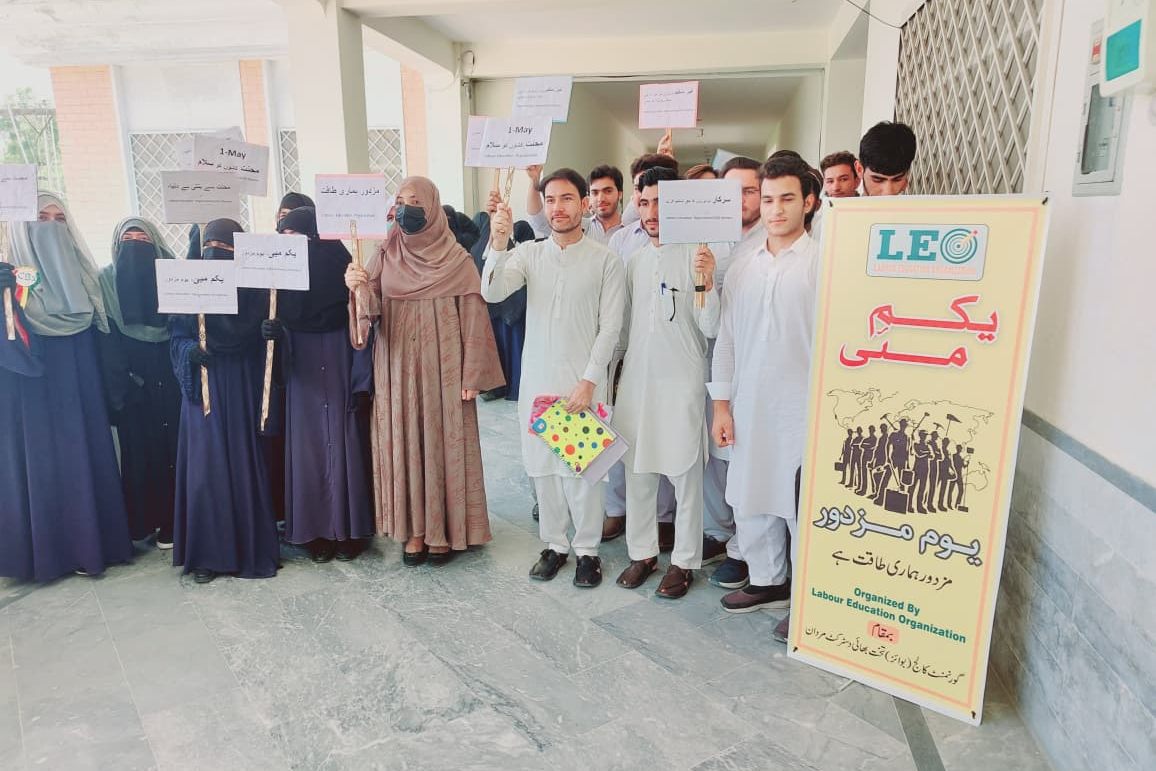
In 2026 the Chairman, Engr. Farooq Khan, spent a day at LEO's office and skills centre in Mardan, going through each activity with the team and setting direction for the year ahead: consolidate what is working, prepare for the pressures coming to the sector, and grow without losing the community footing the organisation was built on.
His emphasis for the next phase is that LEO should build its own digital presence and make deliberate use of artificial intelligence in how it plans, monitors and reports its work. That is a direction set by the Board, not a capability LEO claims today.
Twenty years
How LEO grew
Founded in 2006, registered in 2012, and working at its largest scale now. Every entry below appears elsewhere on this site with its source.
2006Where it began
Founded in Mardan
The first campaign was a narrow, practical one: getting the local primary school upgraded to middle school so children did not stop at primary.
2007
Health and emergency work begins
Blood grouping and hepatitis screening camps, health awareness campaigns, and the first medical camps for families displaced that year.
2010
Flood response
Relief for communities hit by the floods — the second emergency LEO responded to as an organisation.
2012
Formally registered
Registered on 11 January with the Directorate of Social Welfare, Government of Khyber Pakhtunkhwa, number 3695, after six years working as a community organisation.
2025
Buner floods
200 food packages distributed, reaching about 1,400 people.
2025–26
The largest programme year so far
150 hand pumps, 10 small wells and 10 solar wells with Muslim Charity. Baby wards equipped at three medical complexes. Six new classrooms built at the Government Primary School, Kodary Circle.
2026Progressing now
What is under way
A climate-resilient village for flood-affected families is in implementation, and further water expansions were approved in March and April.
To empower vulnerable communities through sustainable development, humanitarian assistance, education, healthcare, clean drinking water, livelihood support, disaster response and community participation.
Our values
Ten commitments the work is measured against
EmpathyProgrammes start from what people say they need, established by assessment before design rather than after it.
Inclusion and toleranceOpen to every community served, without distinction of sect, ethnicity or background.
CommitmentStaying with a village through implementation and after handover, not only to the ceremony.
Integrity and accountabilityEvery figure traceable to a document, and named people answerable for it.
PeaceWorking through the community structures that already exist, rather than around them.
Gender equality and inclusionWomen on the staff, on the board, and among those the programmes reach.
Women's and children's rightsChild labour, child rights and protection of women and minorities are written policy, not sentiment.
Environmental responsibilitySolar-powered supply and climate-resilient design where the alternative would be a diesel pump.
Community ownershipVillage development committees and CBOs decide and monitor, from the start and daily.
TransparencyRegistration, governance, policies and results published here for anyone to check.
Who we serve
The people our programmes are designed around
Partners and networks
Who LEO works with
Named honestly: one active funding partner, a set of past institutional collaborations, and one network membership.
Current funding partner
Muslim Charity — an operational partnership of more than three years, currently funding LEO's water programme.
Past collaborations
Shirkat Gah; the Centre for Peace and Development Initiatives (CPDI); the Democratic Commission for Human Development (DCHD); and IRSP.
Network membership
Member of the Free and Fair Election Network (FAFEN) in Khyber Pakhtunkhwa, authorised to use network credentials for joint initiatives.
 Current funding partner
 Registering authority
 Public hospital collaboration
 Social assistance counterpart
 Past collaboration
 Past collaboration
 Past collaboration
 Past collaboration
 Network membership
 Technical partner
Partner marks are shown to identify the organisations LEO has worked with; each remains the property of its owner, and any partner may ask for its mark to be removed at any time.
How we work
Every project follows the same path
Community-led. Evidence-based. Accountable. Inclusive. Sustainable.
01
Field evidence
Needs assessment carried out with the community, not for it.
02
Project design
Designed against what the assessment actually found.
03
Implementation
Delivered with community oversight throughout.
04
Monitoring
Daily through community and CBO structures; staff fortnightly and monthly; managers quarterly.
05
Documented results
Reviewed by the Executive Body twice a year, with external donor monitoring where required.