Governance and accountability

How LEO is governed and held to account

Registration, governance, who runs LEO, monitoring, safeguarding and how to raise a concern.

Legal status

Registration

  • Registered nameLabour Education Organization (LEO)
  • StatusNon-profit, non-governmental, non-political social welfare organization
  • Registered withDirectorate of Social Welfare, Government of Khyber Pakhtunkhwa
  • Registered underVoluntary Social Welfare Agencies (Registration and Control) Ordinance, 1961 (XLVI of 1961)
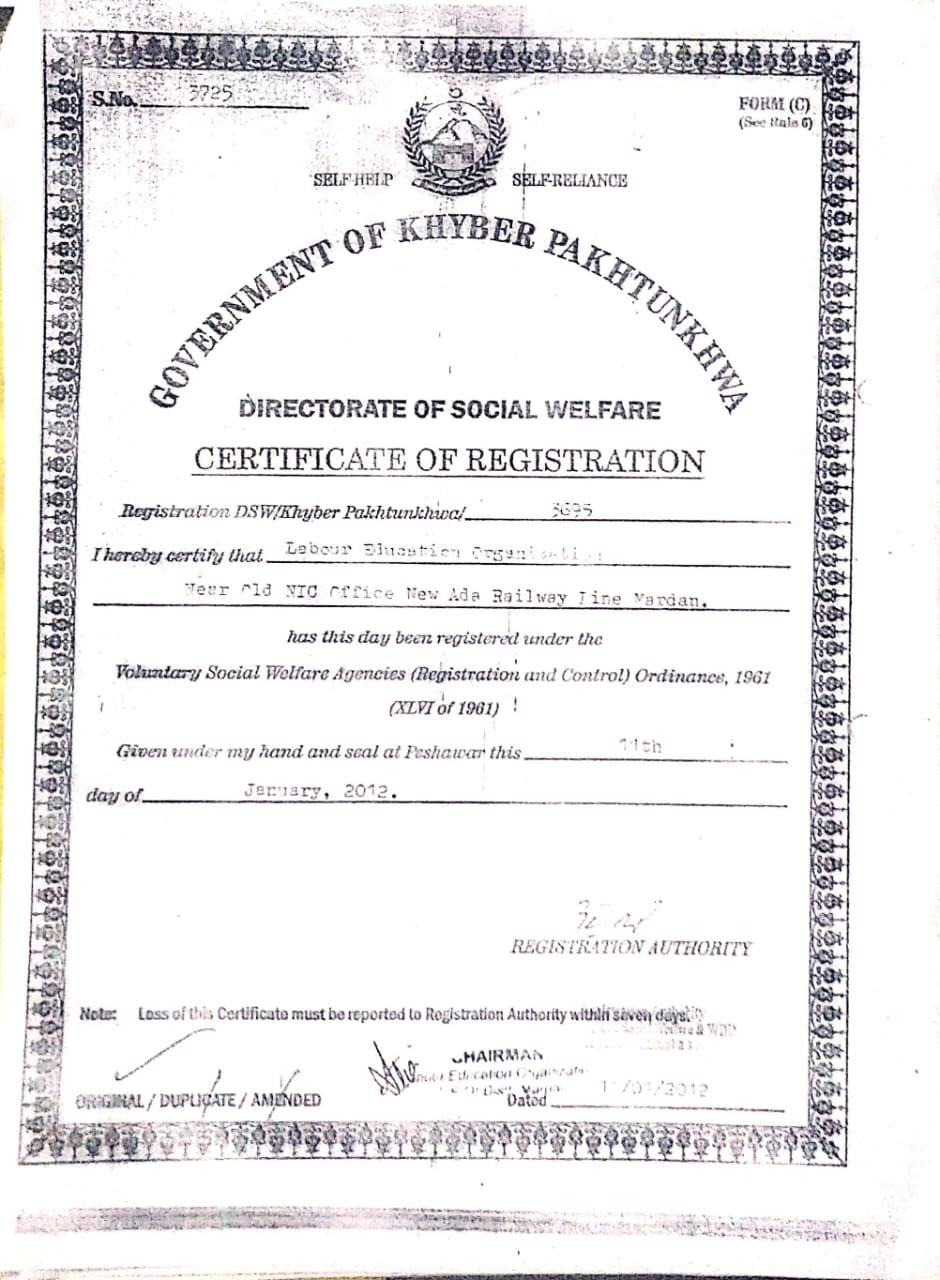
  • Registration numberDSW/Khyber Pakhtunkhwa/3695
  • Date of registration11 January 2012, issued at Peshawar
  • CertificateForm (C) under Rule 6 — reproduced alongside; the original is held at the head office
  • ValidityLifetime registration, under the departmental rules in force before 2020
  • FoundedMarch 2006, Mardan
  • Head officeOld Jan Abad, near the railway line, opposite Engineering University, Charsadda Road, Mardan, Khyber Pakhtunkhwa
LEO's certificate of registration issued by the Directorate of Social Welfare, Government of Khyber Pakhtunkhwa, number 3695, dated 11 January 2012
The certificate itself. Every line in the table is taken from it — open the image to read the number and date for yourself.

Founded in 2006, registered in 2012. LEO worked as a community organisation for six years before it was formally registered. Both dates are given here rather than the more flattering single figure.

Every line above has been checked against the registration certificate itself, not against a summary of it.

One difference worth naming. The 2012 certificate records the organisation at Near Old NIC Office, New Adda Railway Line, Mardan. The head office given above is the current address. Both are in New Adda, Mardan. The registered address has not been updated since 2012.

Governance

Decision-making structure

The General Body meets every two years and democratically elects the Executive Body, which sets direction and reviews programme progress twice a year.

Day-to-day management sits with the Executive Director and programme staff, supported by community-based organizations and village development committees at field level.

The Board of Trustees, the Executive Board and the programme team are all named below.

Who oversees programmes?
The Executive Body reviews progress twice a year. Programme managers visit quarterly, staff monitor fortnightly and monthly, and community and CBO structures monitor daily.
How long has LEO been registered?
LEO was founded in March 2006 and formally registered with the Directorate of Social Welfare on 11 January 2012, registration number 3695, under the Voluntary Social Welfare Agencies (Registration and Control) Ordinance, 1961. Under the departmental rules in force before 2020, that registration is lifetime.
Do donors monitor independently?
Yes. Donors carry out their own external monitoring where their agreements require it.
Custodian body

Board of Trustees

Four trustees holding legal and strategic responsibility for the organisation. Separate from the elected chain below.

The elected chain

Membership

General Body

Meets every two years and democratically elects the Executive Board.

Elected

Executive Board

Seven officers. Sets policy and direction, and reviews programme progress twice a year.

Day-to-day management

General Secretary & Executive Director

Hassan Hassas

Admin and Finance
Atiq-ur-Rehman
Water Project Manager
Tahir Khan
Communication Officer
Hina Gul
Skills Coordinator
Nighat Seema
Assistant Manager
Yasir Ahmed
Technical Skills Specialist
Hazrat Ali

At field level, community-based organizations and village development committees work alongside the programme team and monitor daily.

Board of Trustees

Who the trustees are

The Board of Trustees carries legal and strategic responsibility for LEO. It is distinct from the elected Executive Body, which reviews programme progress twice a year.

Trustees here are not remote from delivery. They work with the programme team consistently and go out to the field themselves, so that direction is set against the realities staff and communities are actually dealing with rather than against a summary of them.

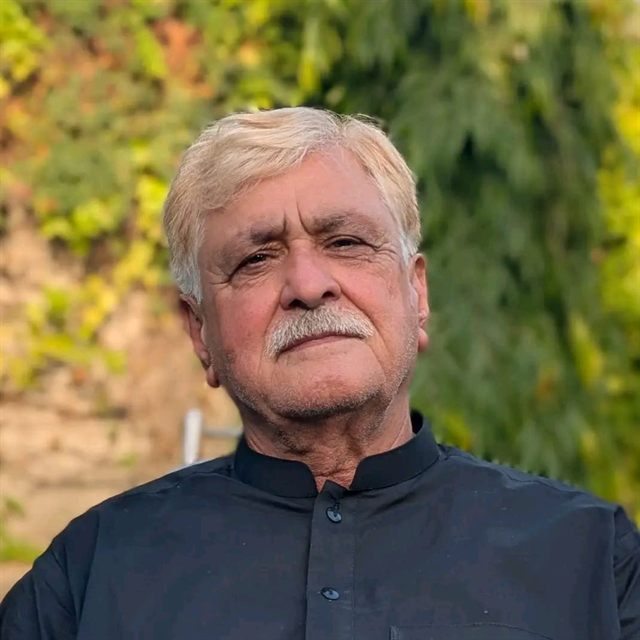
Engr. Farooq Khan, Chairman of the LEO Board of Trustees

Engr. Farooq Khan

Chairman

Dr. Idris Bacha

Member

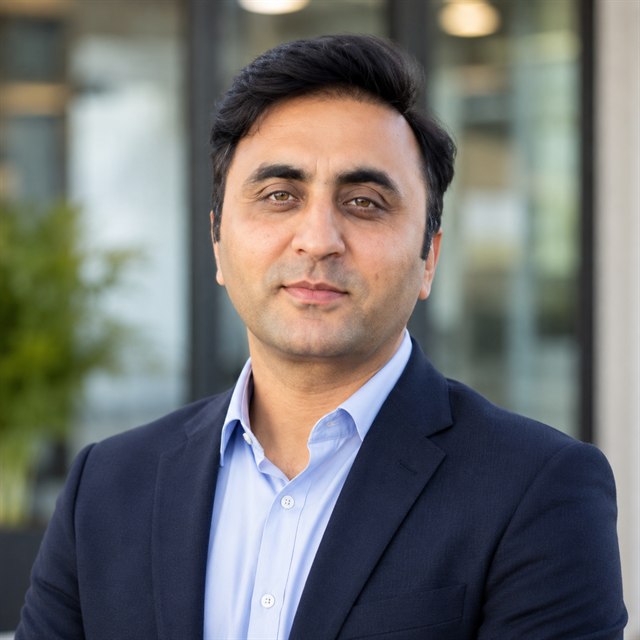
Dr. Jamshed Iqbal, Member of the LEO Board of Trustees

Dr. Jamshed Iqbal

Member

Dr. Nosheen Begum

Member

Portraits are added as each trustee supplies one.
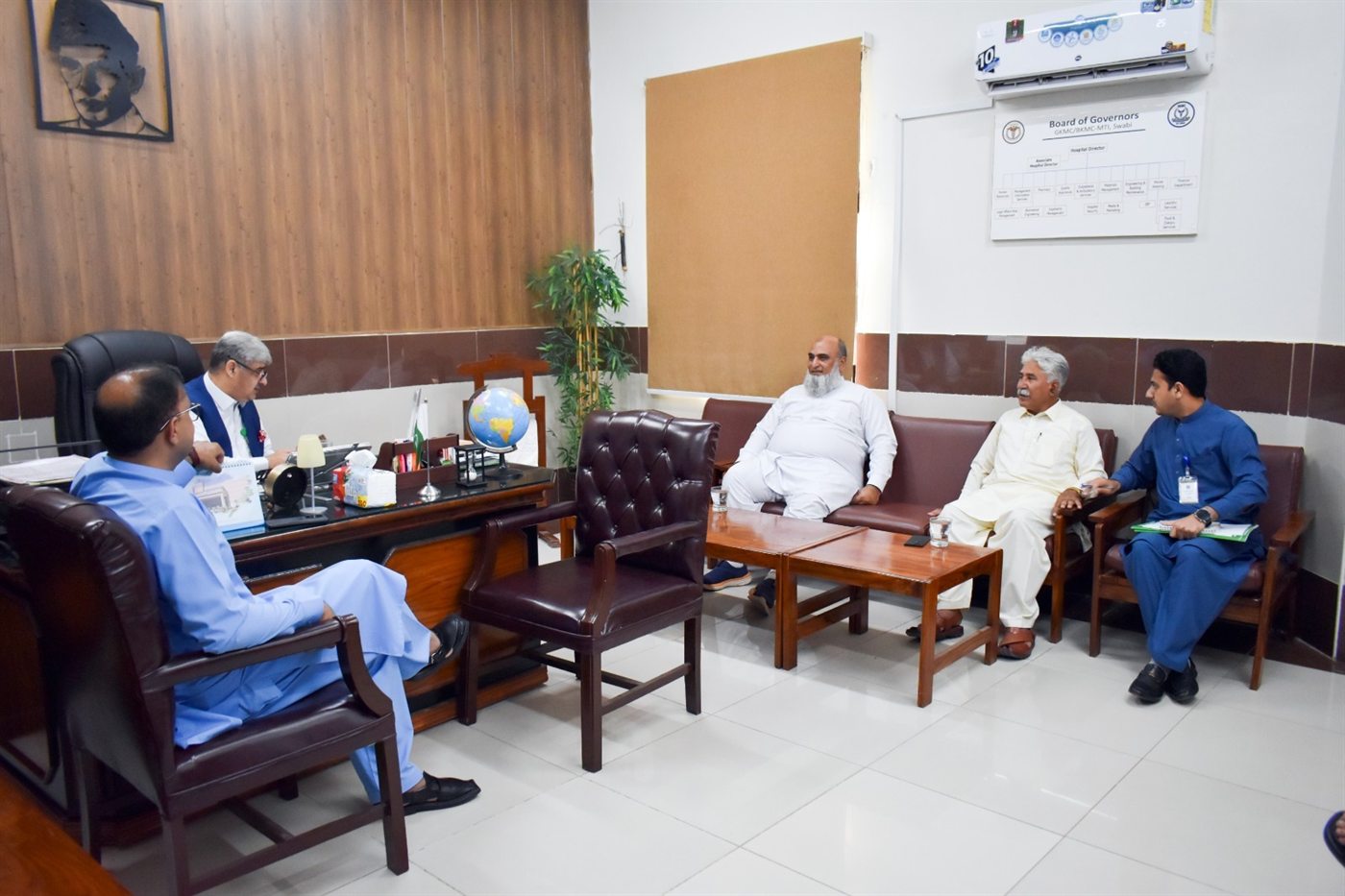
LEO representatives meeting senior hospital officials in an office at the Medical Teaching Institution in Swabi
Senior health officials discussing LEO's projects and its contribution to the health programme, at the Medical Teaching Institution in Swabi — the medical complex whose baby ward LEO equipped.
Who runs LEO

The Executive Board and the team

The Executive Board is elected by the General Body and sets policy and direction. The programme team delivers the work.

Executive Board

Elected by the General Body. Sets policy and reviews programme progress twice a year.

Chairperson

Iram Atiya

MA in Sociology, currently in progress. Chairs the Executive Board.

General Secretary & Executive Director

Hassan Hassas

A founder member, with LEO since it began in 2006. Journalist, Pashto writer, and a master trainer on rights and law.

Vice Chairperson

Zaibu Nisa

MA, University of Peshawar. Social mobiliser with LEO, after years in teaching and field data collection.

Joint Secretary

Salma Bibi

BA, BISE Mardan. Six years a social mobiliser with LEO, after three years in teaching.

Finance Secretary

Haleema

MA in Journalism and Mass Communication. Four years a field coordinator with LEO.

Press Secretary

Muhammad Ayoub Khan

MA in Pashto Literature. A journalist of twelve years and a social mobiliser with LEO for ten.

Office Secretary

Ijaz Ali Shah

BS, Abdul Wali Khan University Mardan.

Programme team

Delivers the work in the field, day to day, under the Executive Director.
  • Admin and FinanceAtiq-ur-Rehman
  • Water Project ManagerTahir Khan
  • Communication OfficerHina Gul
  • Skills CoordinatorNighat Seema
  • Assistant ManagerYasir Ahmed
  • Technical Skills SpecialistHazrat Ali
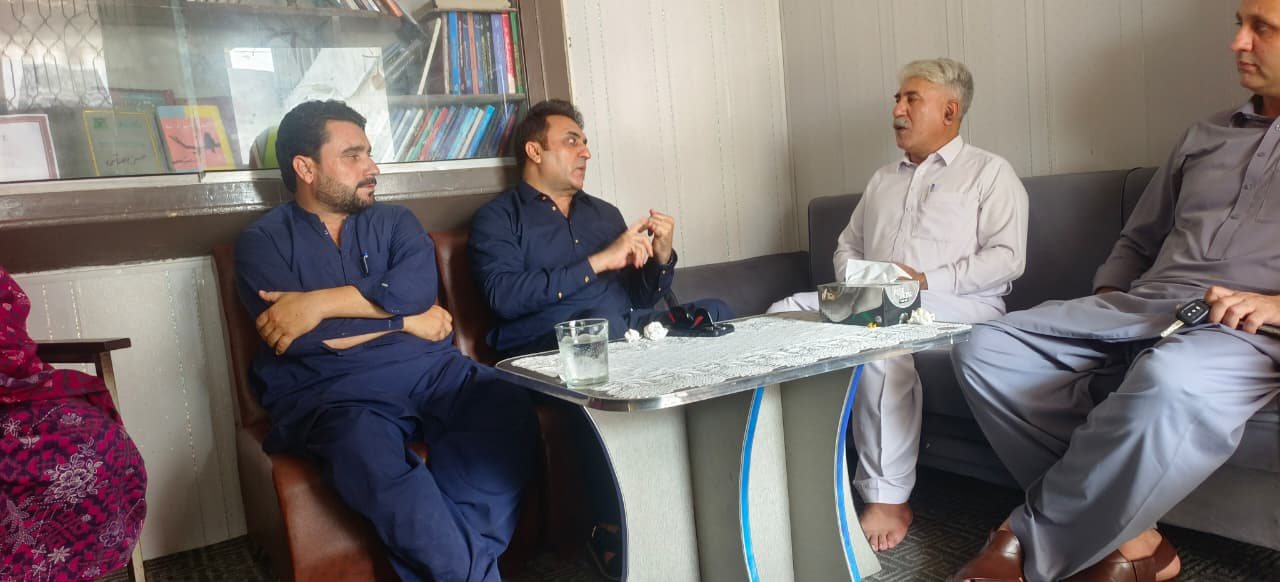
LEO board members and staff in strategic discussion at the organization's office in Mardan
Setting direction at the Mardan office: how LEO should be governed, what changes the next phase needs, the pressures coming to the sector and to funding, and where artificial intelligence and digital tools could strengthen governance and day-to-day operations. A direction the Board is setting, not a capability LEO claims today.

Names and designations as confirmed by the Executive Director, August 2026. Names follow each person's own CV. Biographies give qualifications and professional experience only — no personal contact or identity details are published.

Safeguarding

How we treat the people in our programmes

  • Photographs of identifiable children are not published without documented consent from a parent or guardian
  • Residents of protection settings, including Darul Aman, are never identified
  • Beneficiaries are not photographed in ways that trade dignity for donor appeal
  • Case details that could identify a survivor of violence are never published

LEO has written policies in force on harassment, child labour and child rights, protection of women, children and minorities, and freedom of expression and citizens' rights, alongside informed-consent protocols for photography and media in the field. Copies are available to partners and donors on request.

Two gaps are worth naming rather than hiding: LEO does not yet have a written complaints and whistleblowing mechanism, or a written anti-fraud policy. Both are being prepared. In preparation

Raising a concern. Anyone may raise a concern about LEO's work, staff or partners by writing to leopak.org@gmail.com or calling the office. Concerns are reviewed by the Executive Body.